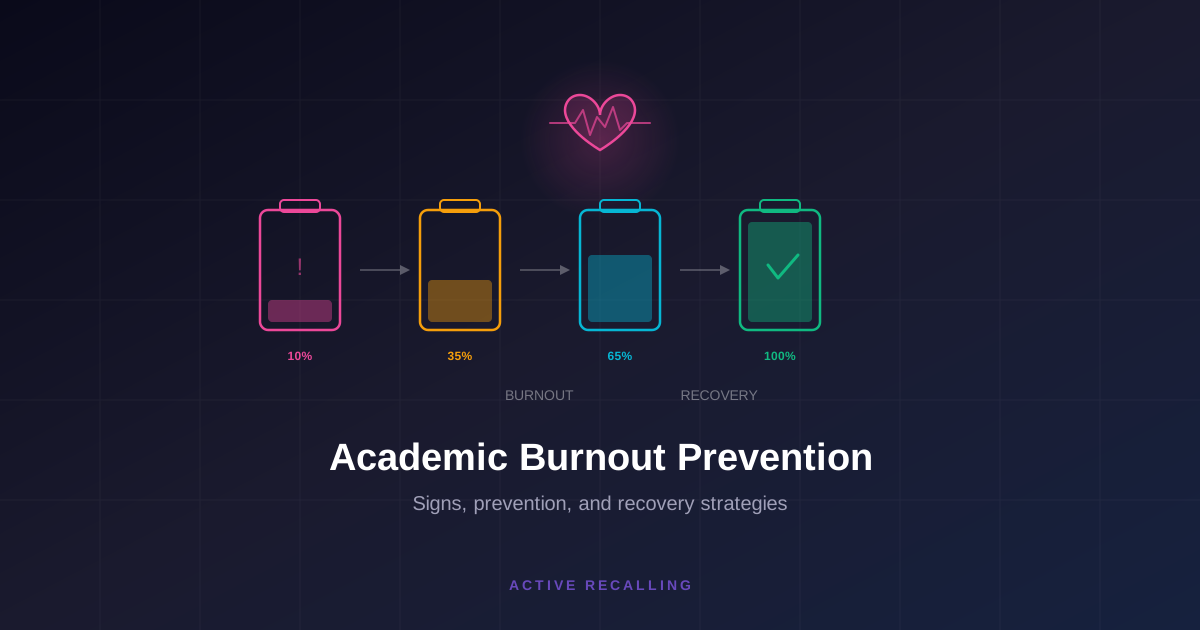
There is a moment that many students recognize but few talk about. You sit down to study, open your textbook, and feel absolutely nothing. Not anxiety, not confusion, not even boredom — just a profound emptiness where motivation used to be. The material that once interested you feels meaningless. The degree that once felt important feels pointless. Getting out of bed requires an act of will that has nothing to do with tiredness.
This is academic burnout, and it is far more common than most students realize. A 2024 survey by the American College Health Association found that over 40 percent of college students reported experiencing burnout symptoms during the academic year. Yet burnout remains widely misunderstood, often dismissed as laziness, lack of discipline, or ordinary stress. It is none of those things. Burnout is a specific psychological syndrome with identifiable causes, recognizable symptoms, and evidence-based strategies for prevention and recovery.
Understanding burnout is not just about academic performance — it is about protecting your mental health during one of the most demanding periods of your life.
What Is Academic Burnout?
Burnout was first described by psychologist Herbert Freudenberger in 1974 and later formalized by Christina Maslach, whose research defined it as a syndrome with three core dimensions.
Emotional exhaustion is the feeling of being drained and depleted, unable to summon the energy for tasks that previously felt manageable. It goes beyond ordinary tiredness — sleep does not fix it, and weekends do not restore it. It is a deep fatigue that affects your capacity to care about your work.
Depersonalization or cynicism manifests as emotional detachment from your studies, classmates, and academic goals. Students experiencing this dimension may become dismissive of their coursework, cynical about the value of their education, or emotionally withdrawn from friendships and campus life.
Reduced personal accomplishment is the feeling that nothing you do matters or makes a difference. Despite putting in effort, you feel ineffective and incompetent. This dimension often creates a vicious cycle: the feeling of inadequacy leads to reduced effort, which leads to worse performance, which confirms the feeling of inadequacy.
Burnout is distinct from ordinary stress. Stress is characterized by over-engagement — too much pressure, too many demands, but you still care and believe that getting through the current crunch will make things better. Burnout is characterized by disengagement — you stop caring, stop believing it will get better, and stop trying. Stress feels like drowning. Burnout feels like being dried out.
Warning Signs to Watch For
Burnout develops gradually, which makes it easy to miss until it becomes severe. Recognizing the early warning signs gives you the best chance of intervening before burnout becomes debilitating.
Emotional Warning Signs
Persistent feelings of dread about academic tasks that you used to handle normally are an early indicator. If the thought of attending a lecture, starting an assignment, or opening your email fills you with a heavy sense of resistance, pay attention. Increasing irritability and emotional volatility — snapping at friends, feeling tearful over minor setbacks, or experiencing disproportionate frustration with small problems — often signal that your emotional reserves are depleted.
A subtle but important sign is the loss of satisfaction from accomplishments. If you turn in a paper, get a good grade, and feel nothing — no relief, no pride, no motivation to continue — the emotional reward system that sustains academic effort is failing.
Physical Warning Signs
Burnout has real physical manifestations because chronic psychological stress affects the body. Persistent fatigue that does not improve with rest is the most common physical symptom. Changes in sleep patterns — either insomnia or sleeping excessively without feeling restored — frequently accompany burnout. Frequent illness occurs because chronic stress suppresses immune function. Headaches, muscle tension, and digestive problems are also common.
If you notice that you are getting sick more often than usual, sleeping poorly despite being exhausted, or experiencing unexplained physical symptoms, consider burnout as a possible underlying cause.
Behavioral Warning Signs
Changes in your study habits are often the most visible signs. Chronic procrastination that is new or significantly worse than usual, withdrawal from study groups or campus activities, skipping classes you previously attended, and turning in work late or not at all are behavioral markers of burnout.
Social withdrawal is another red flag. Students experiencing burnout often pull away from friends, decline invitations, and spend increasing time alone — not by choice but because social interaction feels too draining. If people in your life are commenting that they have not seen you lately, take it seriously.
Academic Warning Signs
A noticeable decline in academic performance — lower grades, careless errors, difficulty concentrating during exams — can signal burnout, particularly if it is not explained by increased difficulty of the material. Difficulty with concentration and memory is common because burnout impairs executive function, working memory, and attention — the cognitive tools that academic work depends on.
Root Causes of Academic Burnout
Understanding the causes of burnout is essential for both prevention and recovery because addressing symptoms without addressing causes leads to recurring cycles.
Chronic Overwork Without Recovery
The most straightforward cause of burnout is sustained high workload without adequate recovery time. Students who study every evening and weekend, never take a genuine day off, and view rest as laziness are running a cognitive deficit that eventually crashes. The human brain requires recovery periods to consolidate learning, process emotions, and restore the neurochemicals that support motivation and focus.
Perfectionism and Unrealistic Standards
Perfectionism is a major risk factor for academic burnout. Students who set impossibly high standards, interpret anything less than an A as failure, and spend excessive time polishing work beyond the point of diminishing returns exhaust themselves in pursuit of an unattainable goal. The gap between their expectations and reality creates chronic disappointment that erodes motivation.
Lack of Autonomy and Meaning
Burnout is more likely when students feel they have no control over their academic path — taking required courses they find pointless, pursuing a major chosen by their parents, or feeling trapped in an educational track that does not align with their interests. When effort feels mandatory rather than meaningful, the psychological cost of that effort increases dramatically.
Social Isolation
Humans are social creatures, and academic environments that promote isolation — competitive grading curves, individual work in every class, long hours alone in the library — deplete the social connection that buffers against burnout. Students who lack a supportive peer group, feel disconnected from their campus community, or are far from family are at elevated risk.
Financial Stress
The financial burden of higher education adds a layer of chronic stress that compounds academic demands. Students working long hours at part-time jobs to cover tuition or living expenses have less time for rest and recovery, creating the conditions for burnout even when their academic workload alone might be manageable.
Prevention Strategies
The most effective approach to burnout is preventing it before it starts. These strategies build resilience against the conditions that cause burnout.
Sustainable Study Practices
Replace marathon study sessions with consistent, moderate daily practice. Five hours of focused study spread across the day is more productive and far less draining than eight hours of exhausted, unfocused studying. Use evidence-based techniques like active recall and spaced repetition to maximize the learning return on every hour invested, allowing you to study less total time without sacrificing performance.
Tools like Active Recalling help make study time more efficient by automatically generating practice materials and scheduling reviews at optimal intervals. When your study methods are effective, you can achieve better results in fewer hours — a direct counter to the overwork that drives burnout.
Scheduled Recovery
Build genuine rest into your schedule as a non-negotiable commitment. This means at least one full day per week with no academic work, regular exercise, consistent sleep, and social activities that recharge rather than drain you. Recovery is not a reward for productivity — it is a prerequisite for sustained productivity.
The concept of active recovery is also valuable. Activities like hiking, playing music, cooking, or engaging in creative hobbies provide mental restoration in ways that passive activities like scrolling social media do not. Your brain needs engagement with something other than your academic work, not just an absence of effort.
Boundaries and Time Limits
Set clear boundaries around your study time. Decide in advance when you will start and stop studying each day, and honor the stop time regardless of where you are in your work. Open-ended study sessions that stretch into late evenings are a primary driver of burnout because they eliminate the psychological boundary between work and rest.
This requires accepting that there will always be more you could study. The goal is not to study everything possible but to study the most important material effectively within a sustainable time frame.
Meaningful Connection
Invest in relationships and community as burnout prevention. Study groups, campus organizations, friendships, and mentor relationships provide social support that buffers against stress and reminds you that your identity extends beyond your academic performance.
If you find yourself isolated, make a deliberate effort to reconnect. Attend a club meeting, reach out to a classmate, or visit your professor's office hours. Even small social interactions can interrupt the isolation cycle that accelerates burnout.
Realistic Expectations
Examine your expectations and standards honestly. Are you pursuing excellence or perfection? Excellence means doing your best work within reasonable constraints. Perfection means chasing an impossible standard that guarantees disappointment. Adjusting your internal expectations from perfection to excellence can dramatically reduce the psychological cost of academic work.
Accept that some semesters will have lower grades than others, some courses will be less engaging, and some assignments will receive less than your best effort because you are balancing multiple demands. This is normal and does not indicate failure.
Recovery Strategies
If you are already experiencing burnout, prevention advice alone is insufficient. Recovery requires deliberate, often uncomfortable changes.
Acknowledge the Problem
The first step in recovering from burnout is acknowledging that it is happening. Many students resist this because they fear that admitting burnout means admitting weakness. It does not. Burnout is a predictable response to unsustainable conditions, not a personal failing. Naming it accurately is the foundation for addressing it.
Reduce Your Load
If possible, reduce your commitments to a sustainable level. This might mean dropping a course, stepping back from an extracurricular activity, reducing work hours, or asking for deadline extensions. Many students resist load reduction because it feels like giving up. In reality, it is the most strategic response to burnout — a temporary reduction that preserves your long-term capacity.
Talk to your academic advisor about options. Most institutions have policies for reduced course loads, incomplete grades, and medical or personal leave that exist specifically for situations like this.
Rebuild Basic Habits
Burnout often disrupts sleep, nutrition, and exercise — the foundations of cognitive and emotional health. Before trying to fix your study habits, rebuild these basics. Establish a consistent sleep schedule. Eat regular meals. Get outside and move your body daily, even if it is just a 20-minute walk.
These basic habits will not cure burnout on their own, but they create the physiological foundation for recovery. Trying to recover from burnout while sleep-deprived and physically inactive is like trying to fill a bucket with a hole in it.
Reconnect with Purpose
Burnout often involves a loss of meaning — forgetting why you are pursuing your education in the first place. Spend time reflecting on your motivations. What drew you to your field of study? What do you hope to do with your education? What aspects of learning used to excite you?
If you cannot reconnect with your original motivation, that itself is valuable information. It may indicate that a change of direction — switching majors, adjusting your career plans, or exploring new academic interests — would serve you better than powering through on a path that no longer resonates.
Gradual Re-engagement
Recovery from burnout is not a single moment of feeling better. It is a gradual process of rebuilding capacity and motivation over weeks or months. Start with small, manageable study sessions focused on material you find genuinely interesting. Build slowly from there, monitoring your energy and motivation as you increase your load.
Resist the temptation to "make up for lost time" by immediately returning to the workload that caused burnout. The conditions that created the problem will create it again unless you change them.
When to Seek Professional Help
Academic burnout can overlap with or develop into clinical depression and anxiety disorders. If your symptoms include persistent hopelessness, loss of interest in all activities (not just academic work), significant changes in appetite or weight, thoughts of self-harm, or an inability to function in daily life, seek professional help immediately.
Most universities offer free or low-cost counseling services specifically for students. These services are confidential and staffed by professionals experienced with academic stress and burnout. You do not need to be in crisis to use them — early intervention is far more effective than waiting until you are in severe distress.
If you are unsure whether your experience is burnout or something more serious, err on the side of seeking help. A counselor can help you distinguish between burnout and clinical conditions and recommend the appropriate response. There is no minimum threshold of suffering required to ask for support.
Supporting Others
If you notice burnout symptoms in a friend or classmate, approach them with empathy rather than advice. Saying "You seem really stressed lately, how are you doing?" opens a conversation without judgment. Avoid minimizing their experience ("Everyone is stressed") or offering unsolicited solutions ("Just study harder").
Sometimes the most helpful thing you can do is simply normalize the struggle. Knowing that others experience similar difficulties reduces the shame and isolation that often accompany burnout. Encourage them to use campus support services, but respect their autonomy in deciding how to respond.
Conclusion
Academic burnout is a serious but preventable and recoverable condition that affects a large proportion of students. Recognizing the warning signs — emotional exhaustion, cynicism, and reduced accomplishment — allows for early intervention before burnout becomes debilitating.
Prevention centers on sustainable study practices, scheduled recovery, meaningful social connection, and realistic expectations. Recovery requires acknowledging the problem, reducing your load, rebuilding basic health habits, and gradually re-engaging with your studies.
Your education matters, but not more than your mental health. The students who sustain high performance over the long term are not the ones who push hardest through exhaustion — they are the ones who learn to balance effort with recovery, ambition with self-compassion, and academic goals with genuine wellbeing. Building that balance is not a distraction from your education. It is one of the most important things your education can teach you.